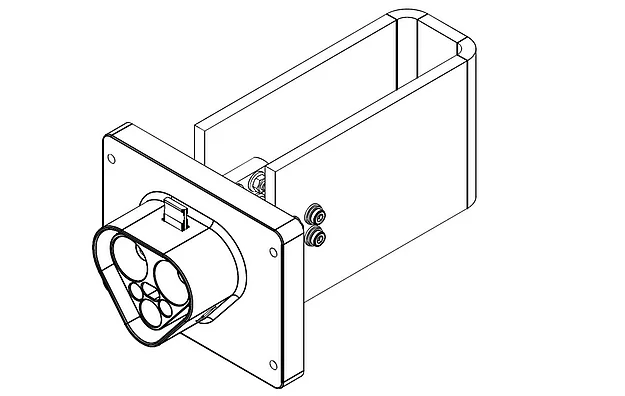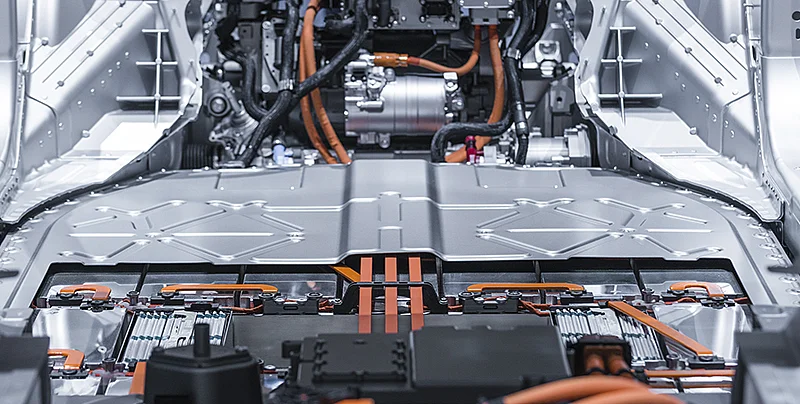
The automotive industry is rapidly advancing the electrification of its model ranges. This means that many new types of electrical components in the LV and HV voltage ranges must be tested and validated, such as electric drives, power electronics, battery management systems, pyrotechnic battery disconnectors, vehicle charging sockets and HV and LV connectors, including power distribution and protection systems. Traditional components such as electric heaters or water pumps must be redesigned for electric operation.
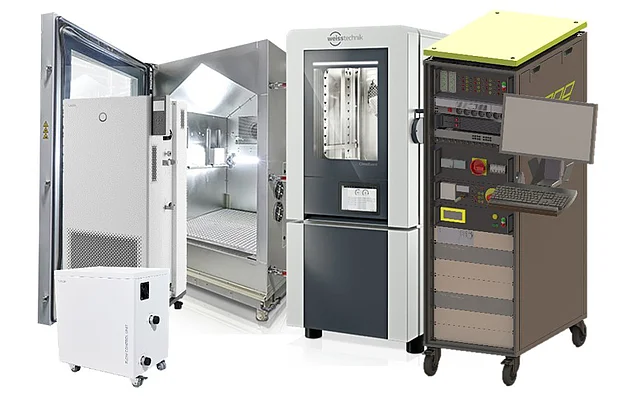
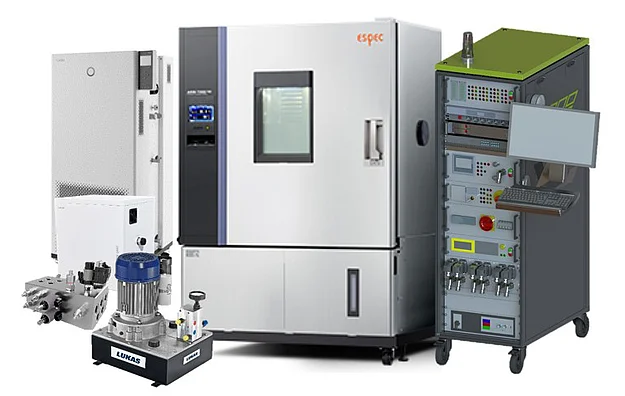
To enable flexible control of components, experts at AUCOTEAM GmbH are developing a platform as part of a research project funded by the Ministry of Economic Affairs and Energy (BMWE). This platform enables control and data retrieval from a wide variety of automotive components. In addition to control via CAN, LIN and SENT bus protocols, the test specimens can be supplied with different voltages. Furthermore, a wide range of analog measurement data can be recorded and communication with external equipment such as cooling water conditioners, pressure boosters and loads can be implemented. Centralized communication with test equipment such as climate chambers, shakers or splash water devices, etc. is also part of the project.
The hardware will be interchangeable via plug-and-play to ensure rapid adaptation to the respective test specimen. Changes to the hardware should be kept to a minimum, provided they do not fundamentally differ from the functional scope. For example, if a test cannot be performed with power supply X, it should be possible to replace it with another power supply Y or expand it via a master/slave-capable power supply without requiring fundamental re-programming work and maintaining the test sequence saved.
The AUCO-Labs software—a development concept by AUCOTEAM GmbH—works in conjunction with the test plan manager (TPM) to handle communication with the test object, coordinate the test sequence and interface the flexible hardware. The goal is to demonstrate this complex process on a simple and intuitive interface to enable fast, efficient and high-quality testing with maximum flexibility. This software concept is also intended for use in customers’ future test benches, thereby minimizing software development costs.