Chemical Resistance Tests
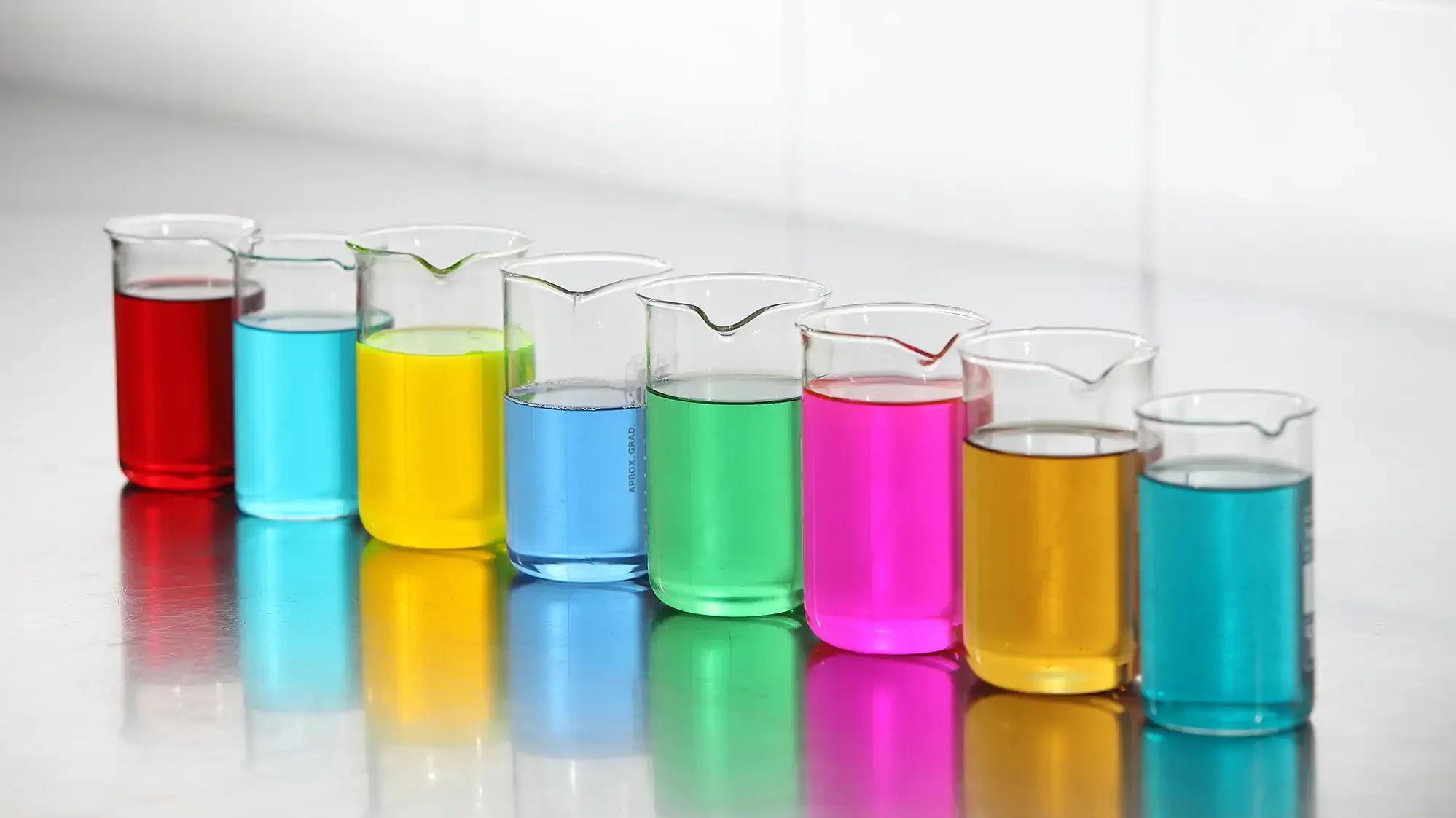
Whether it’s fuels, oils, lubricants, operating fluids, acids, cleaning agents or everyday substances like hand cream, sweat, or cola - products that can withstand such influences are ideally suited for real-world use. In nearly all technical industries, aggressive substances come into contact with materials and products. Particularly in the automotive and food industries, mechanical engineering, aviation, the medical and rail sectors, and building services engineering, a wide variety of operating, disinfecting, and cleaning agents are used, to which products must be reliably resistant.
But how long does a material or component retain its shape? Which seal fails after contact with certain agents? Testing reliably demonstrates how well plastics, paints, seals, markings, warning labels, or assemblies withstand a wide range of chemicals - and provides results for development, approval, or damage analysis.
In AUCOTEAM’s accredited testing laboratory, we test material samples, components, and assemblies for their chemical resistance.
Testing Methods and Technologies
Chemical resistance testing is performed using various methods, depending on the substance, the application environment, and the requirements of the relevant standards:
Application methods
Typical application methods include
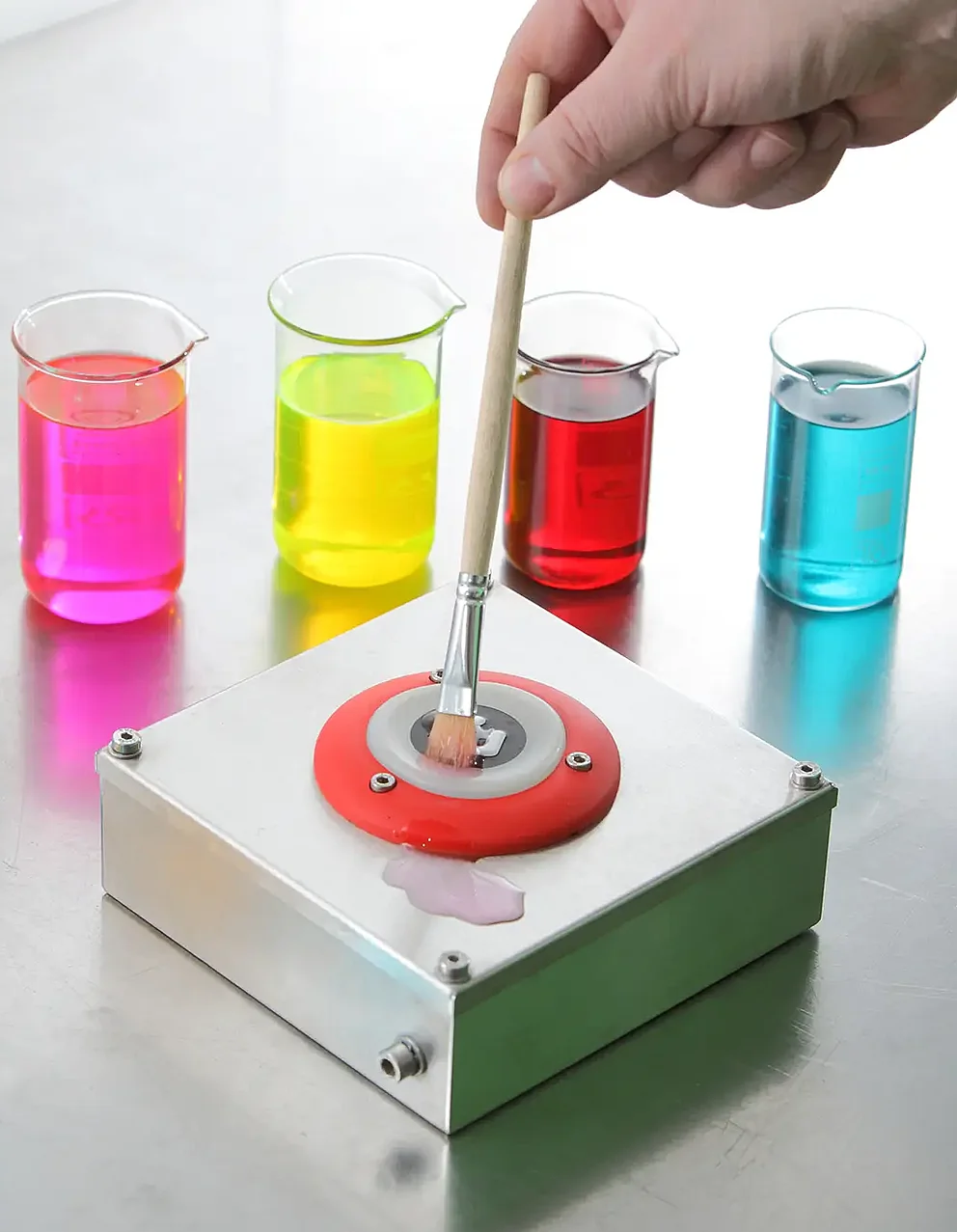
- Brushing
- Dipping (immersion and submersion)
- Spraying
- Painting on
- Wiping
- Pouring over
- Dripping
Depending on the standard or specification, the samples treated with these substances can also be put in temperature or climate storage to simulate the effects of the substances in a realistic setting.
Chemical resistance under temperature conditions
Test specimens are exposed to reagents (e.g. oils, greases, gasoline, brake fluid, cleaning agents, disinfectants, alkalis, acids) in accordance with standard specifications and then stored under controlled environmental conditions.
Post-service inspection
Evaluation of test specimens with regard to:
- Deformation
- Swelling / Shrinkage
- Weight changes
- Surface changes
- Color changes
- Cracking
- Peeling of coatings, labels, or markings
- Chemical reactions
Corrosion
Long-term storage / Continuous stress testing with chemicals
Temperature storage test in oil, fuels, coolant, or other media
- Temperature storage in various media
- Stress, including circulation of the media
- In accordance with DIN EN IEC 60068-2-2
Temperature cycling test in oil, fuels, coolant, or other media
- Rapid temperature cycling using an immersion test chamber in accordance with IEC 60068-2-14
- Slow temperature cycling via medium temperature control in accordance with IEC 60068-2-14
- Temperature storage in various media
- Stress testing including media circulation
Periodic disinfection tests
- Disinfectant spray
- Disinfectant wipe
- Automated disinfection cycles with temperature control (continuous operation) on, e.g. blood pumps
Standards and Quality Assurance
Our testing procedures are based on international standards and guidelines:
- DIN EN 60068-2-45
- DIN EN ISO 2812-1 – Resistance of coatings to liquids
- ISO 16750-5 – Road vehicles: chemical influences
- GS 95024-3-1 – Electrical and electronic components in motor vehicles
- GS 95006-7-1 – Wiring harnesses in motor vehicles – Connector testing
- VW 75174 – Automotive connectors
- VW 80000 – Electrical and electronic components in motor vehicles up to 3.5 t
- VW 80332 – Automotive high-voltage contacts
- VW 80302 – Automotive High-Voltage Contacting
- MBN 10306 – Electrical and Electronic Components in Motor Vehicles
- JDQ 201 B4 – Testing of Electronic and Electrical Devices – Environmental and Mechanical Stress
- LV 124 – Automotive Connectors PG 22A and PG 22B
- LV 214 – Automotive Connectors PG 22A and PG 22B
- LV 215 – Automotive Connectors
- FCA CS 00056 – Electrical and Electronic Components in Motor Vehicles
- DIN EN 62368-1 – Equipment for Audio/Video, Information, and Communication Technology
- MIL-STD-810 – Environmental Engineering Considerations and Laboratory Tests
- RTCA DO-160G – Environmental Conditions and Test Procedures for Airborne Equipment
The tests are conducted using:
- Documentation of media, concentration, temperature, duration
- Measurement of material changes: weight, dimensions, color, structure
- Photographic evidence and test reports
- Evaluation according to standards or individually defined limit values
As an accredited testing laboratory, we provide globally recognized test reports.
- In digital form
- with comprehensive photographic documentation
- recognized by official bodies

Standards and Quality Assurance
Our testing procedures are based on international standards and guidelines:
- DIN EN 60068-2-45
- DIN EN ISO 2812-1 Resistance of coatings to liquids
- DIN EN ISO 2812-2 Resistance of coatings to liquids
- ISO 16750-5 – Road vehicles: chemical influences
- GS 95024-3-1 – Electrical and electronic components in motor vehicles
- GS 95006-7-1 – Wiring harnesses in motor vehicles – Connector tests
- VW 75174 – Automotive connectors
- VW 80000 – Electrical and electronic components in motor vehicles up to 3.5 t
- VW 80332 – Automotive high-voltage contacts
- VW 80302 – Automotive high-voltage contacts
- MBN 10306 – Electrical and electronic components in motor vehicles
- JDQ201 B4 – Testing of electronic and electrical equipment – Environmental and mechanical stresses
- LV 124 – Automotive connectors PG 22A and PG 22B
- LV 214 – Automotive Connectors PG 22A and PG 22B
- LV 215 – Automotive Connectors
- FCA CS 00056 – Electrical and Electronic Components in Motor Vehicles
- DIN EN 62368-1 – Audio/Video, Information, and Communication Technology Equipment
- MIL-STD-810 Environmental Engineering Considerations and Laboratory Tests
- RTCA DO-160G Environmental Conditions and Test Procedures for Airborne Equipment
The tests are performed with:
- Documentation of media, concentration, temperature, duration
- Measurement of material changes: weight, dimensions, color, structure
- Photographic evidence and test reports
- Evaluation according to standards or individually defined limits
As an accredited testing laboratory, we provide you with globally recognized test reports.
- In digital form
- with informative photographic documentation
- recognized by official bodies
Typical Applications & Industries
Automotive / Electric Mobility
Oil, gasoline, brake fluid, EV charging infrastructure (chemical-resistant seals)
Railway technology
Outdoor applications involving de-icing agents, cleaners, fuels, and a combination of temperature and storage duration
Medical Technology & Laboratory Equipment
Disinfectant testing, contact time + functional retention + surface behavior
Smart Buildings & Building Systems
Tests for resistance to cleaning agents and solvents, e.g. for switches, sensors, and covers
Industrial & Energy Facilities
Chemical environment caused by oils, acids, and alkaline substances

The benefits of working with AUCOTEAM
- Chemical resistance testing, e.g. for plastics, coatings, seals, and housings
- Standard-based methods (ISO, DIN) and customer-specific media profiles
- Realistic test procedures
- Can be combined with climate tests, endurance tests, or IP tests
- Testing experience with all common media (e.g. solvents, oils, fuels, disinfectants)
- Precise documentation for QA, certification, and development
- Flexible test bench design thanks to our test automation

Have your materials tested for chemical resistance now!
Would you like to know whether your materials are resistant to chemicals and environmental factors in the long run, whether your plastic cover can withstand alcohol-based disinfectants, or whether your connector can withstand automotive reagents?
Then talk to us. We simulate real-world conditions and deliver reliable, comparable results—compliant with standards and practical.