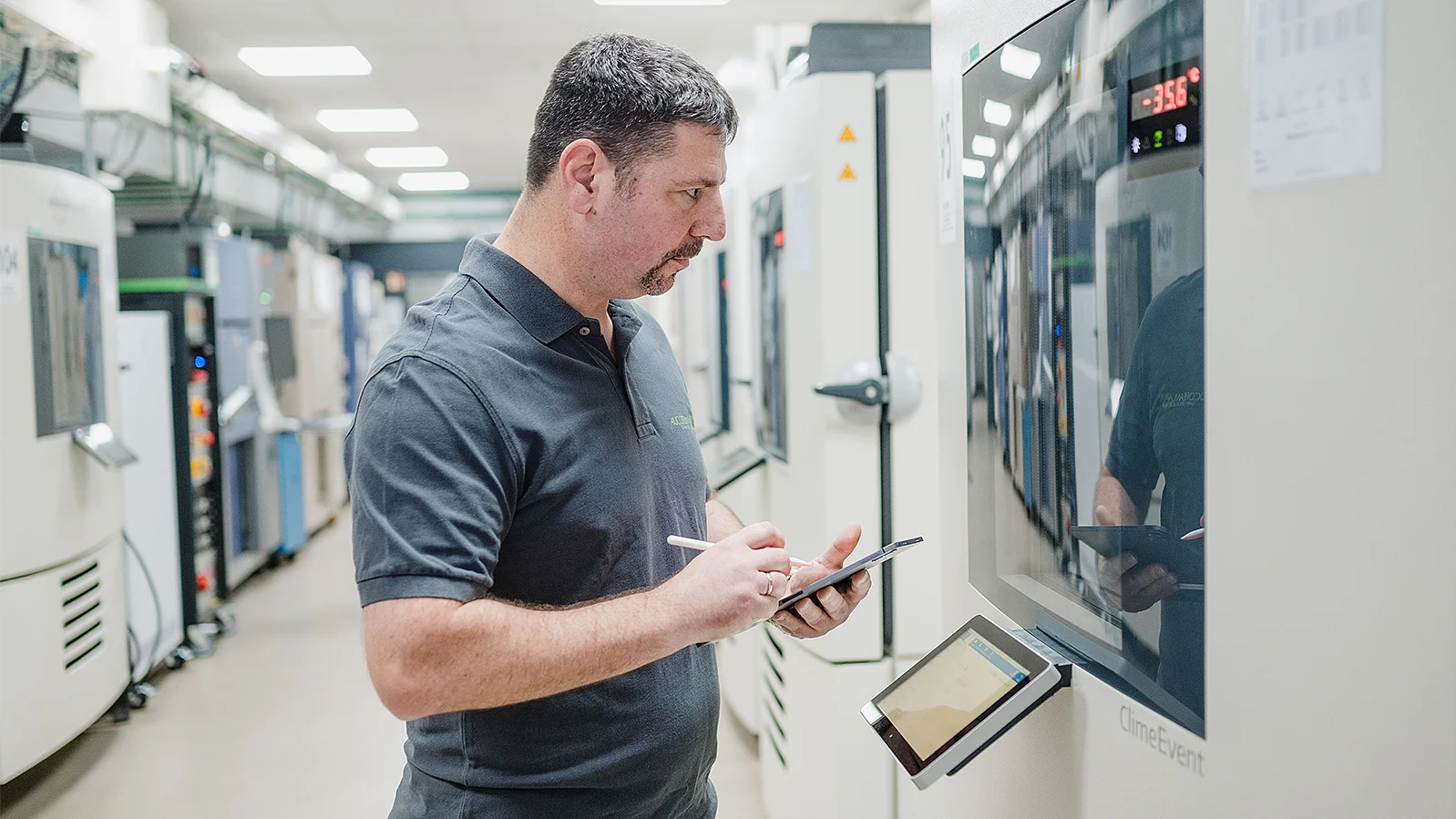
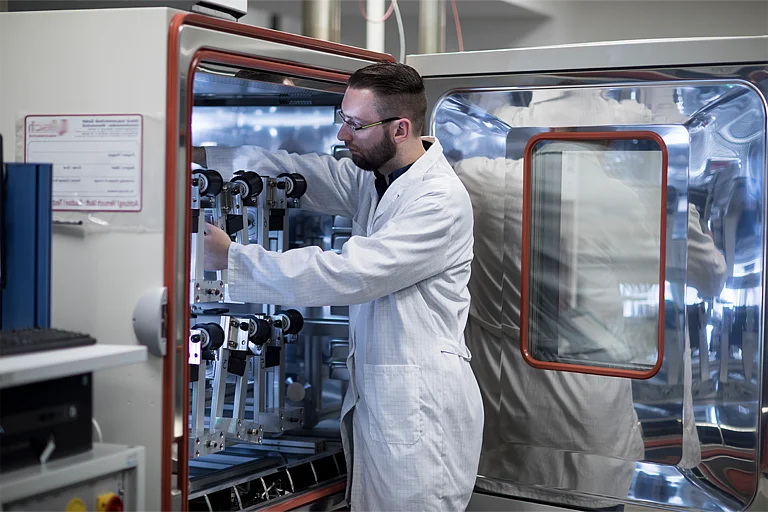
Temperature and Climatic Testing at the AUCOTEAM Testing Laboratory in Berlin
Whether in the automotive, aviation, railway, maritime industry or other industrial sectors — in every industry, products must perform reliably even under extreme environmental conditions. Rapid and gradual temperature changes, climates with high humidity (with or without frost), extreme cold, or condensation - all place equal strain on materials, electronics, and enclosures
At our accredited testing laboratory, we conduct a wide range of temperature and climatic tests — under realistic conditions, compliant with standards, and precisely tailored to your application. Using state-of-the-art testing technology and decades of experience, we realistically simulate climatic stresses and provide insights into the reliability, functionality, and service life of your products.
Whether for type-acceptance testing, for quality assurance purposes, or to support your research and development efforts: Our testing procedures are based on national and international standards and can be tailored to your specific requirements.
A Look at Our Climatic Tests
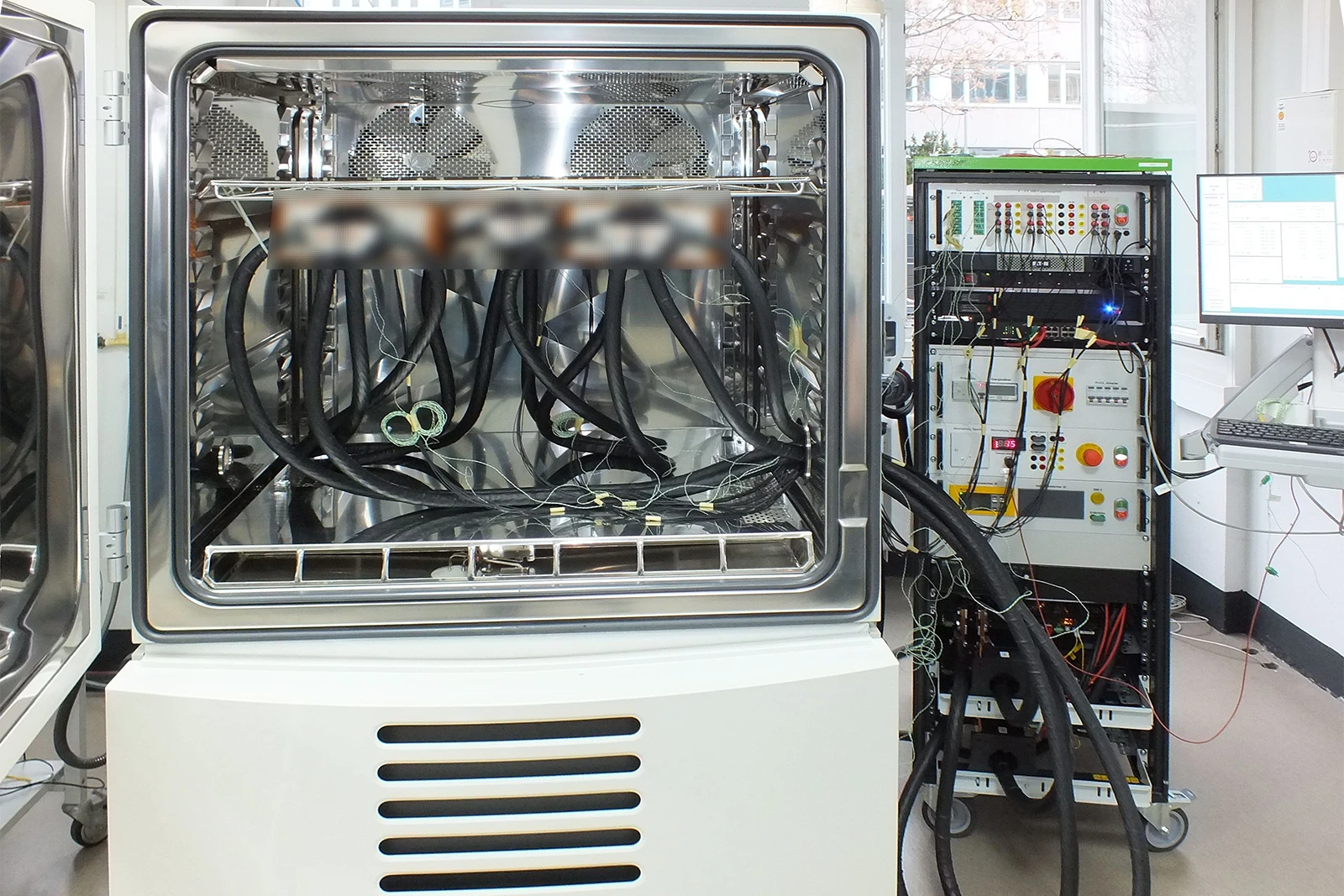
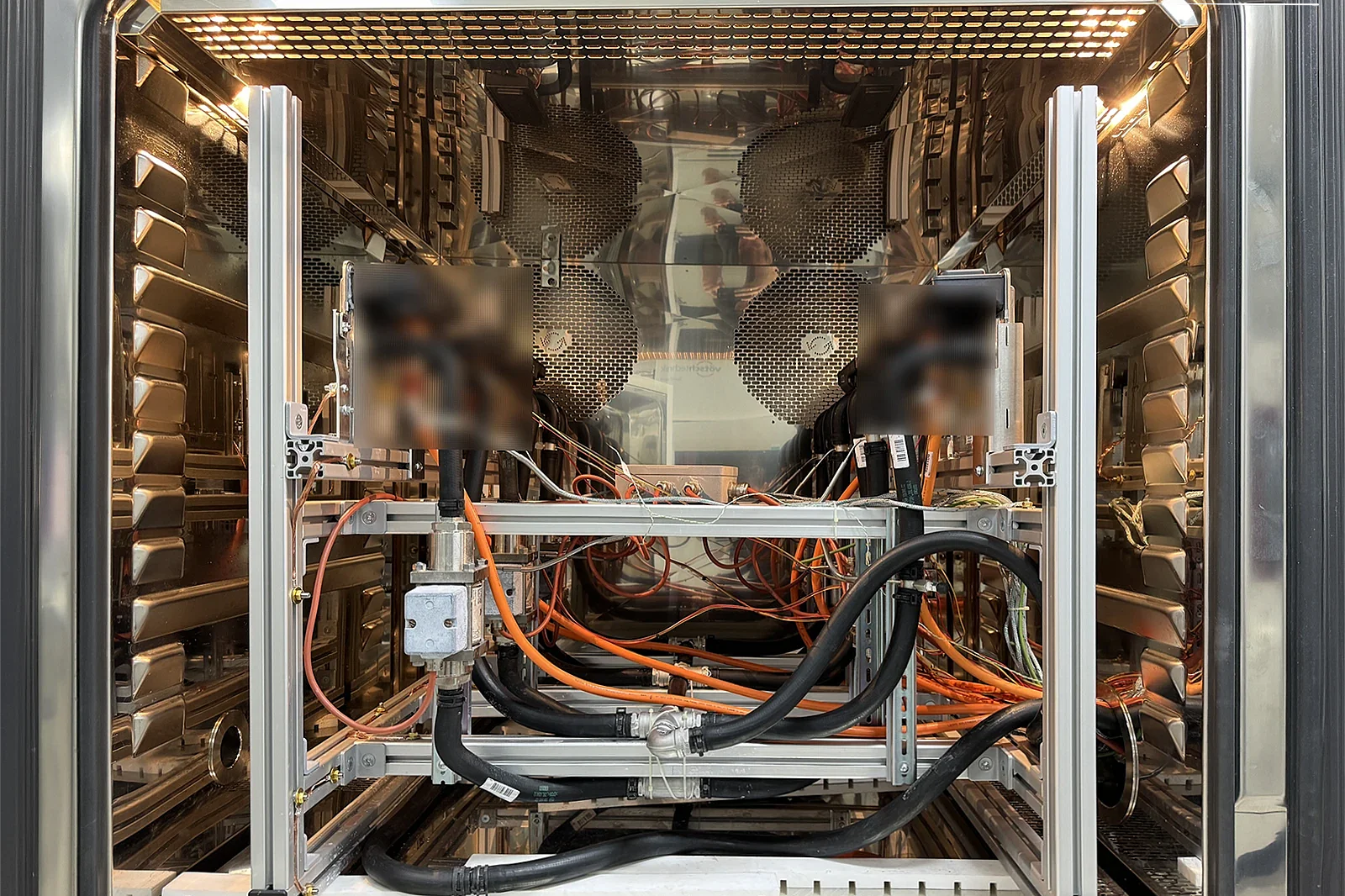
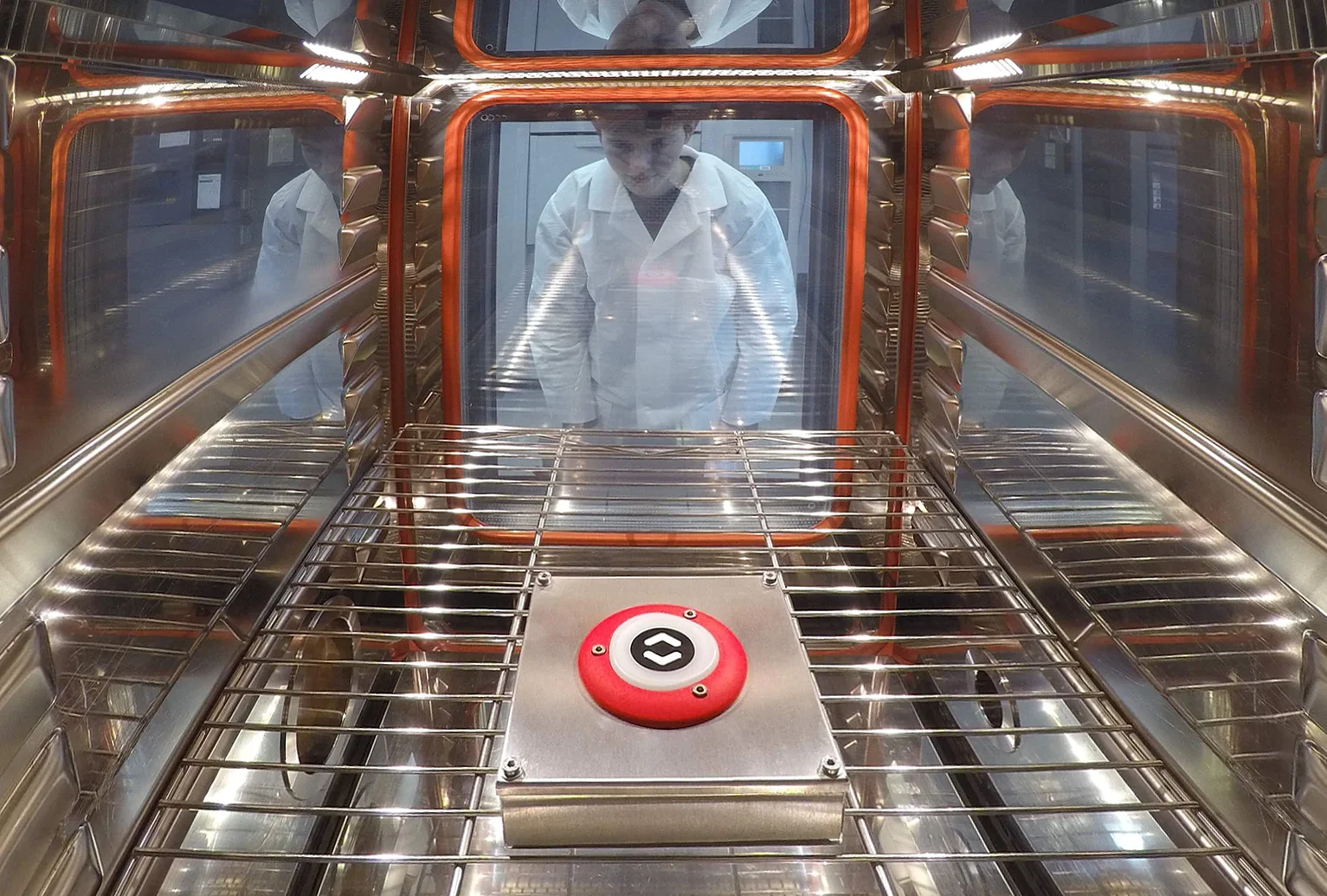
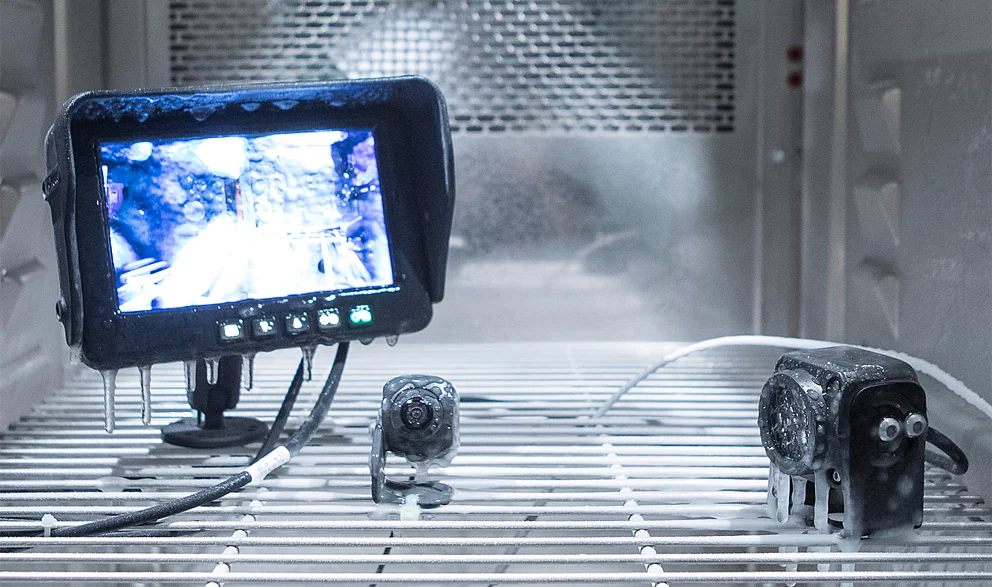
Why are temperature and climatic tests important for your product?
Temperature and climatic testing provides insights into how products perform and hold up in real-world use:
- How does a device perform under dynamic temperature changes, extreme heat, or extreme cold?
- What effects does a change in humidity have on mechanical or electronic assemblies?
- Does condensation pose a problem for the function or safety of a component?
Whether it is research and development, quality assurance, or type-acceptance testing - climatic testing is a fundamental part of any product qualification process, especially in industries subject to strict regulatory standards.
Our services and areas of expertise
For accelerated ageing, lifetime verification, failure analysis (defect detection), and specific development-related testing, we offer a wide range of thermal and climatic tests
Our testing scope:
- Cold testing (down to -75 °C)
- Dry heat testing (to 1,300 °C)
- Rapid temperature change (thermal shock)
- slow temperature cycling (> 10 K/min)
- Temperature cycling with various media (oil, salt, etc.)
- Damp heat, steady state
- Damp heat, cyclic
- HAST testing (Highly Accelerated Temperature/Humidity Stress Test)
- K-15 condensation test in accordance with common automotive standards
An Overview of Our Climate Testing Services
Temperature cycling tests
Using high-performance temperature and climate chambers, we test how products perform under varying temperature regimes in the range of -75 °C to +250 °C. The temperature transition can occur at a defined rate of change > 10 K/min or as a thermal shock.
We conduct these tests in accordance with industry standards (e. g., EN 60068-2-14) or your specific requirements.
Temperature-controlled storage
Storing products or packaged goods at constant temperatures can accelerate ageing processes.
Temperature-controlled storage enables the analysis and evaluation of a product’s long-term stability, shelf life, and functional performance.
The required storage duration can be calculated using statistical and physical models.
We would be happy to advise you on the optimal approach for your specific application.
Climatic testing, continuous and cyclic
Changing environmental conditions pose challenges for every product.
These tests allow us to evaluate how components behave under cyclic humidity conditions, whether additional freeze phases may cause damage, and to what extent condensation affects functionality or operational safety.
We perform these tests in accordance with relevant standards (e. g., EN 60068-2-30, EN 60068-2-38, EN 60068-2-67, EN 60068-2-78) or based on your specific requirements.
Dew / Condensation Testing (K-15 or K-15a)
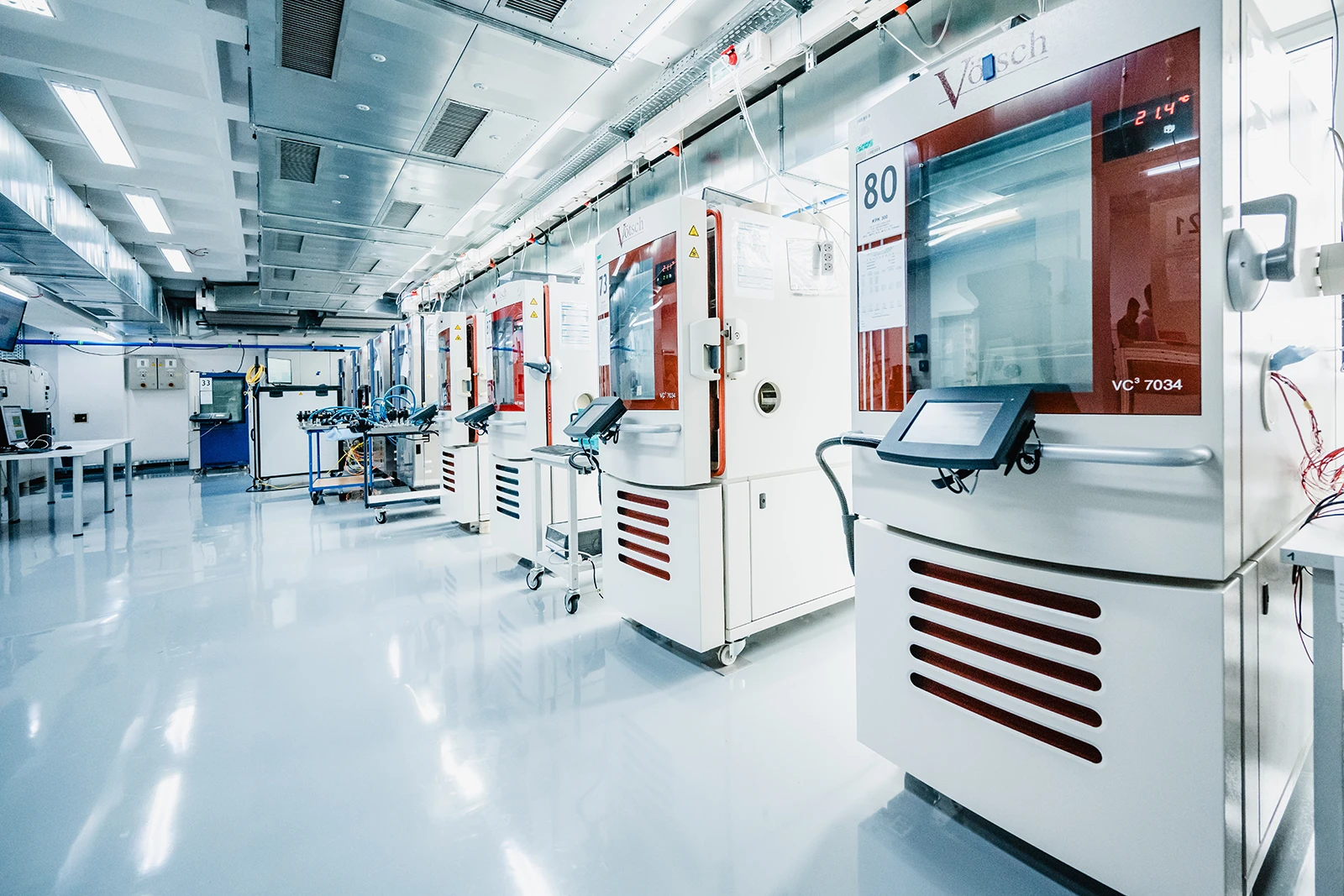
In the automotive sector, a dedicated condensation test (K-15 or K-15a) is required as part of product qualification. For this purpose, we operate a range of test chambers with capacities of up to 1,000 litres. These chambers have been specifically equipped with water bath control, compressed air drying systems, steam injection nozzles, and protective covers, enabling us to reproduce this demanding test scenario in a standards-compliant and highly reproducible manner.
Typical standards for this test include VW 80000, GS 95024-3-1, and MBN 10306.
Lifetime Calculation
Based on real operating conditions, we calculate the expected service life or required test duration and define the appropriate test parameters for your product qualification.
Arrhenius model
Activation of chemical degradation processes through high-temperature endurance testing
- Coffin-Manson-model
Mechanical strain of materials caused by thermal cycling - Lawson-model
Corrosion processes in materials driven by damp heat (e. g. 85 °C / 85 % relative humidity)
Control and monitoring of test specimens
Test specimens can be controlled using high currents, high voltages (HV), as well as coolants, compressed air, and other media.
It is possible to communicate with various bus systems and to record all electrical and mechanical parameters.
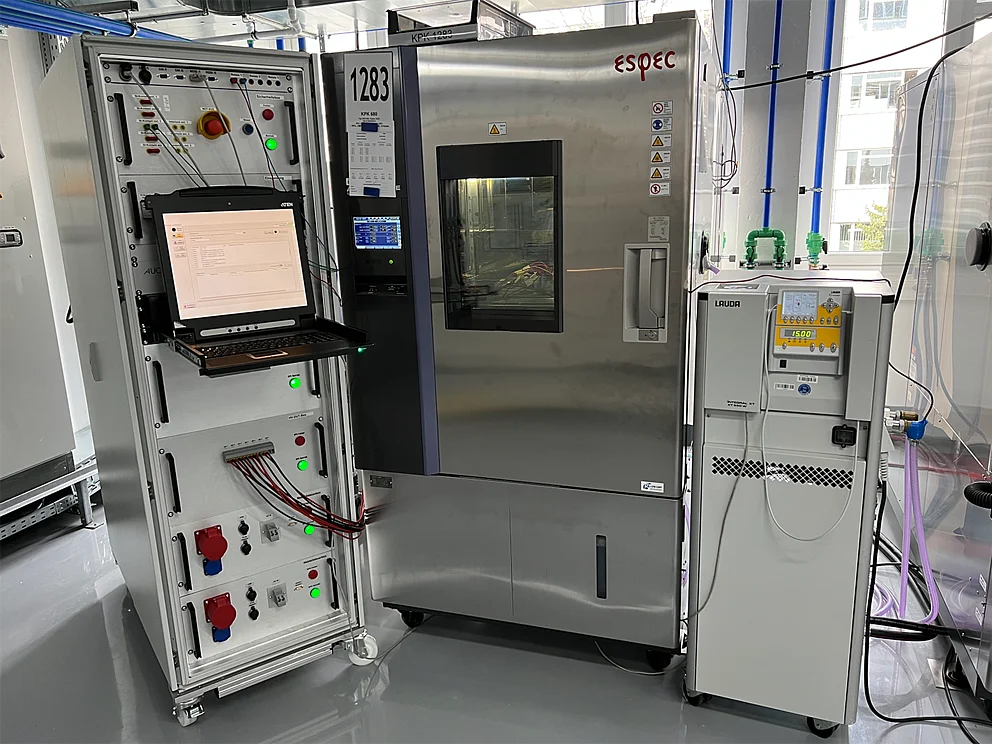
Heart of Test – our test racks for complex components
With our modular “Heart of Test” racks, we offer a flexible platform for the validation of complex components with high-voltage (HV) and low-voltage (LV) supply, safety functions, and bus interfaces such as CAN, LIN, SENT. The system can be combined with and extended with external equipment such as climate chambers, liquid conditioning units, and more, enabling comprehensive and scalable test setups.
Customer benefits:
- Fast start of testing
- Cost-efficient through reuse and rental options
- No in-house development required
Artificial weathering and solar simulation
Standards and Quality Assurance
Our testing procedures are based on the following standards and guidelines:
- IEC 60068-2-1 – Test A: Cold
- IEC 60068-2-2 – Test B: Dry heat
- IEC 60068-2-14 – Test N: Temperature cycling
- IEC 60068-2-30 – Test Db: Damp heat, cyclic
- IEC 60068-2-38 – Test Z/AD: Combined test
- IEC 60068-2-61 – Test Z/ABDM: Sequence of climatic tests
- IEC 60068-2-66 – Test Cx: Damp heat, constant
- IEC 60068-2-67 – Test Cy: Damp heat, constant, accelerated test
- IEC 60068-2-78 – Test Cab: Examination Cab: Damp heat, constant
- ISO 16750-4 – Road vehicles - Environmental conditions and testing for electrical and electronic equipment - Part 4: Electrical loads
- DIN EN 50155 – Railway applications
- DNV-CG-0339 – Tests for maritime operations
- RTCA DO-160G – Aviation requirements
- MIL-STD-202 / MIL-STD-810 / MIL-STD-883
- VW 80000 – Electrical and electronic components in motor vehicles weighing up to 3,5 tons
- GS 95024-3-1 – Electrical and Electronic Components in Motor Vehicles – Environmental Requirements and Tests
- MBN 10306 – Electrical and Electronic Components in Motor Vehicles—Environmental Requirements and Tests
Our DAkkS (national accreditation body of Germany) accreditation in accordance with DIN EN ISO/IEC 17025 ensures standards-compliant, reliable, and reproducible test results.
We provide comprehensive and transparent documentation, including:
- Complete documentation of test specimens, test setups, as well as measurement and testing equipment
- Full recording of all temperature and environmental conditions
- Evaluation in accordance with applicable standards or individually defined limit values
As an accredited testing laboratory (DIN EN ISO/IEC 17025), we deliver globally recognized test reports:
- In digital format
- With detailed photographic documentation
Recognized by official authorities
Who We Test For – An Overview of Industries
Automotive & Electric Mobility
Control units, lighting systems, multimedia and communication systems, sensor technology, charging electronics, vehicle electrical system components, management systems e. t. c.
Railway technology
Antennas, camera systems, emergency power systems, power supplies, control systems, displays, signaling and communication systems, and much more
Medical technology
Mobile supply and analysis systems, medical devices, displays, and communication systems
Energy Sector & Industrial Electronics
Sensors, power components, control systems and control technology, control cabinet components
Smart Buildings & Building Automation
Sensors, control units, actuators, and lighting and control technology
We serve many industries and provide standards-compliant consulting for your testing requirements.
Typical test specimens:
- Control units with CAN, LIN, or SENT interfaces
- Relays, electrical contacts, actuator modules
- Sensors, control systems
- Lights, control elements, industrial equipment
- various sensors and actuators in the automotive sector
Climatic Testing at AUCOTEAM – Customer benefits
- High-performance climate chambers: From -75 °C bis +250 °C, with optional humidity control and media supply
- Heating ovens up to +1,300 °C
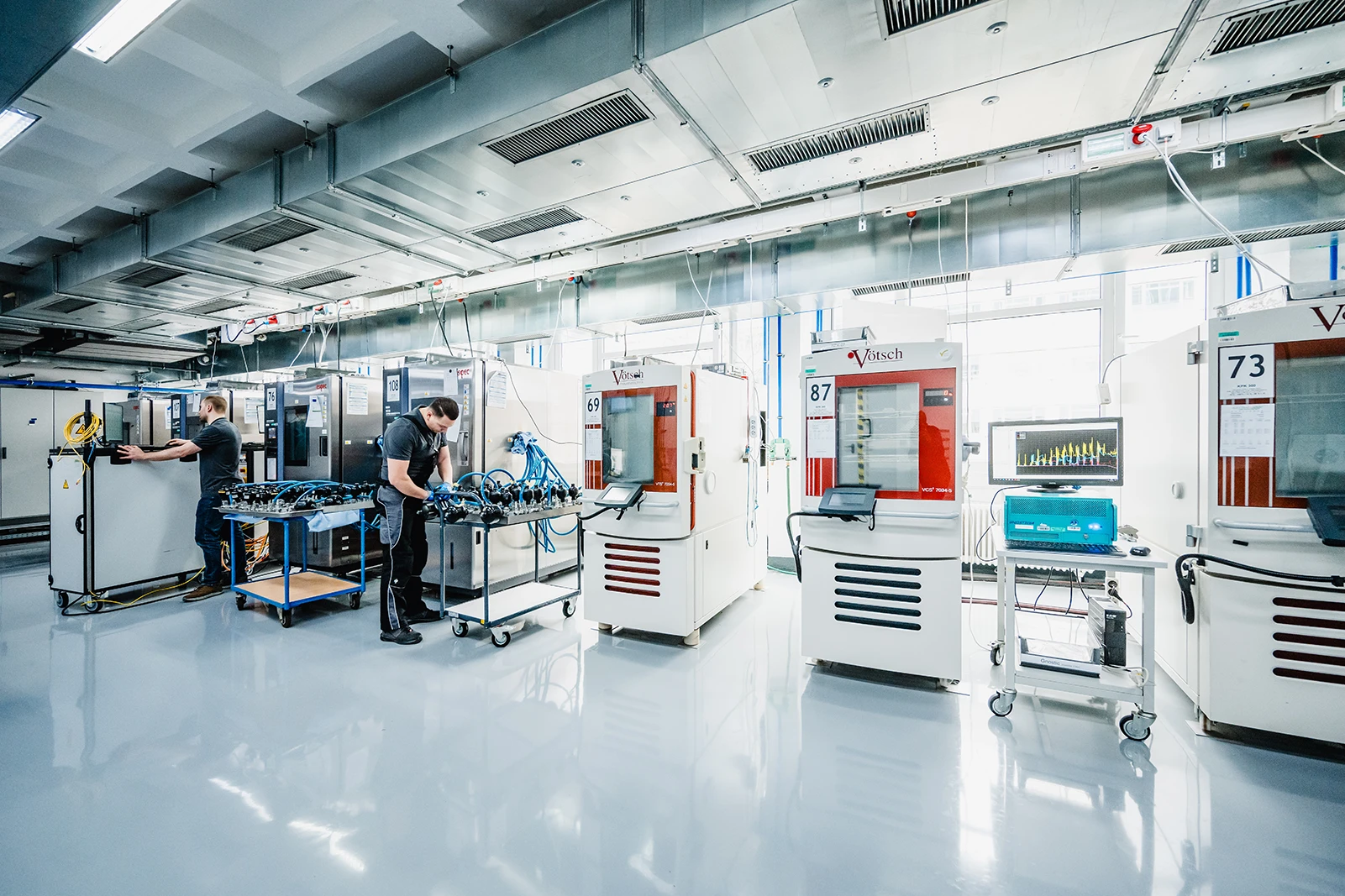
- More than 70 temperature and climate chambers—enabling parallel testing, long-term studies, and rapid availability
- Combined test methods: Temperature, humidity and vibration in a single test cycle
- Highly experienced test engineers with a deep understanding of technical concepts and the ability to assess them reliably
- Custom test rig extensions available – e. g. for insertion cycle testing under environmental conditions, metrological monitoring, or high-current / high-voltage loading of test specimens
- Industry-independent testing services: supporting automotive, energy, rail, medical technology, smart home, and many other sectors
Sample Test Programs
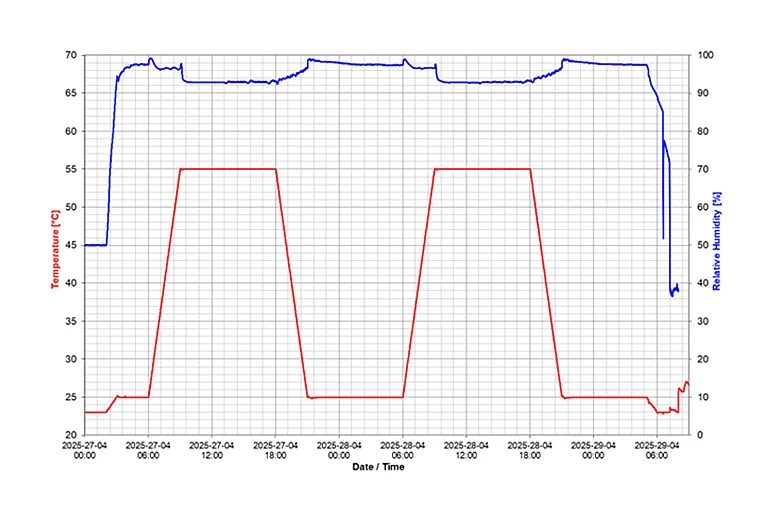
Our climate tests are modular in design, for example:
- Profile 1: Temperature cycling -40 °C/+85 °C, 20 cycles with a 30 min dwell time
- Profile 2: Humidity testing at +40 °C/93 % r.F. for 96 hours
- Profile 3: Solar simulation / UV exposure, 24 hours at +65 °C
- Profile 4: Combined climate and vibration testing including continuous monitoring of the test specimen
All test programs can be freely customized and combined to meet your specific requirements—including real-time measurement and detailed test reporting.

Request a quote for climatic testing now!
Would you like to implement a specific test profile or need advice on the appropriate standard?
We will guide you every step of the way, from the initial concept to a test report that meets all standards.