Safety, Performance and Compliance with standards for Your Components, Products and Systems
Electrical testing is essential when it comes to evaluating the conductivity of electrical connections or the insulation properties of materials or components. For this purpose, we offer precise and complex measurement and testing procedures that accurately represent the conductivity or the respective insulation properties.
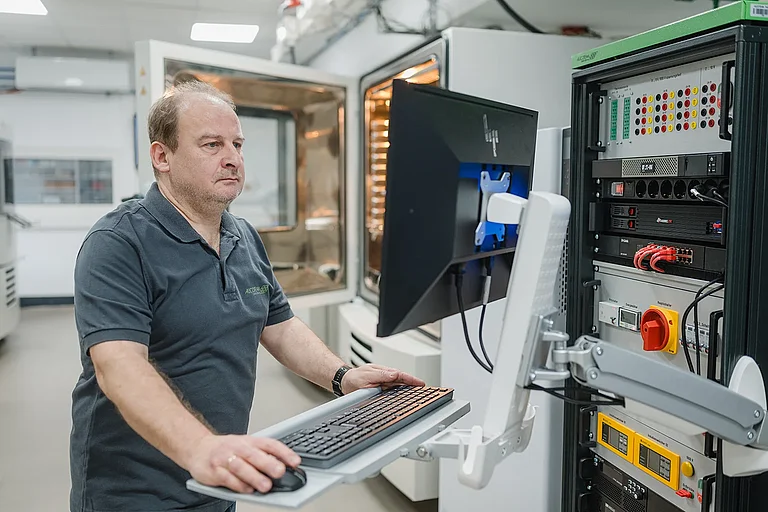
Furthermore, electrical tests are carried out on products to simulate conditions in a vehicle's electrical system (HIL- Hardware-in-the-loop). The evaluation of the functional state is based on an assessment matrix specified in the respective standard.
In the accredited testing laboratory of AUCOTEAM in Berlin, we test these parameters reliably, precisely and reproducibly.
Whether for type acceptance testing, as part of quality assurance or to support your research and development: our electrical testing procedures are based on national and international standards.
Why are electrical tests useful and important?
Electrical tests provide precise information about the conductivity of the tested connection. Only in this way can the electrical properties of a material or connection be assessed with regard to the required application.
- Protection of people and the environment from dangerous voltages or flashovers (Does the protective conductor work and is the insulation sufficient?)
- Ensuring adequate clearance and creepage distances
- Ensuring appropriate transition quality for electrical connections such as crimp and plug-in connections
- Electrical tests as part of on-board network simulation ensure that the respective components function correctly even in the event of fluctuations or disturbances in the supply voltages, or switch to an appropriate safe state.
Electrical tests can be carried out before the start of series production as part of type acceptance testing or during ongoing production as part of quality assurance.
Services and Focus Areas
For the evaluation of a material, an electrical connection or a complex component, we offer various measurement and testing procedures.
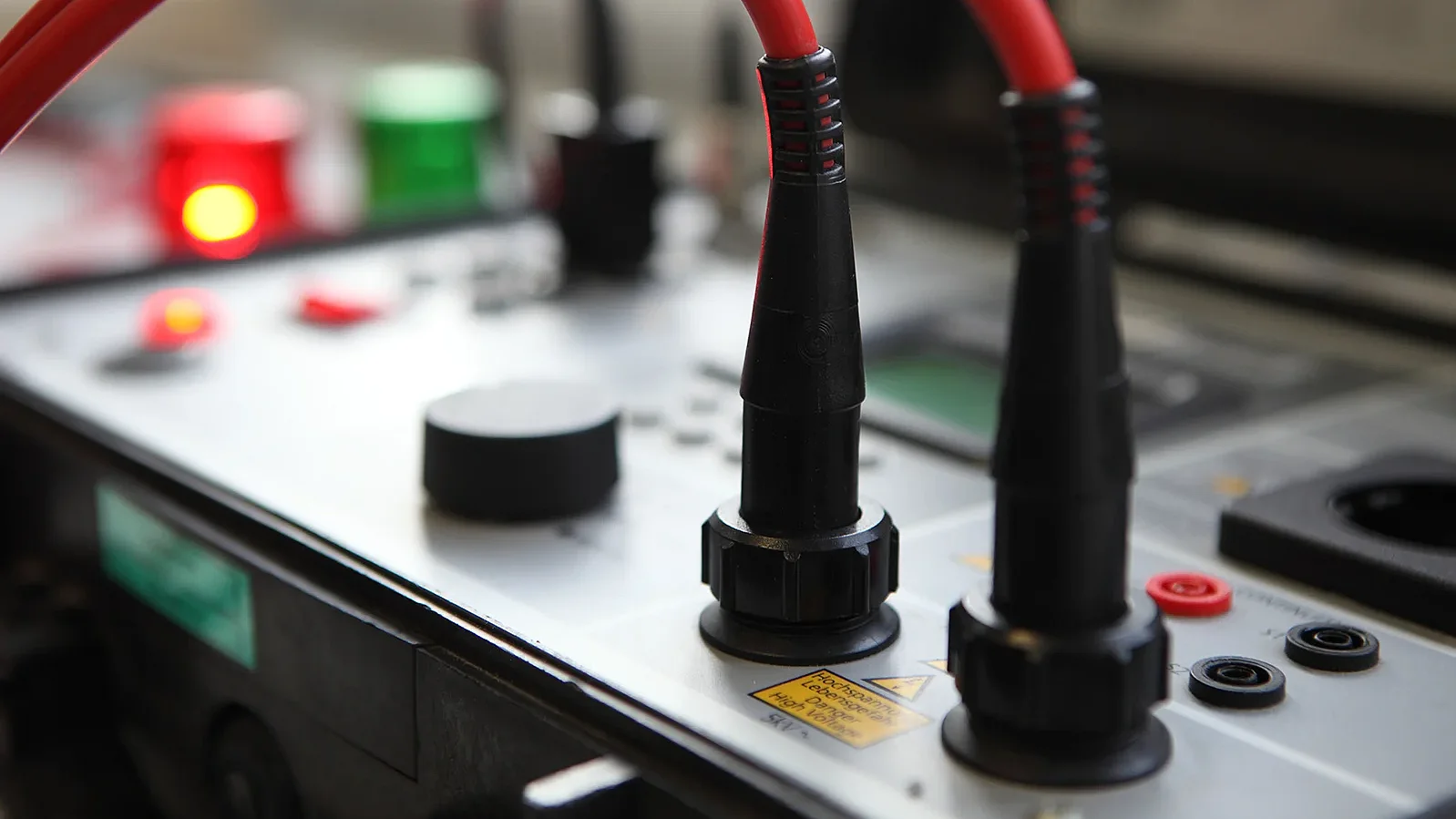
High-Voltage Testing
Electrical testing with high voltage to test the electrical dielectric strength
Electrical Resistance and Impulse Voltage Testing
Electrical testing with high-energy pulses to test the electrical dielectric strength
Insulation Testing / Insulation Resistance Measurement
This test ensures that no impermissible leakage currents occur during normal operation.
Protective Conductor Testing
Tests whether the protective conductor is correctly connected and properly dissipates the current in the event of a fault
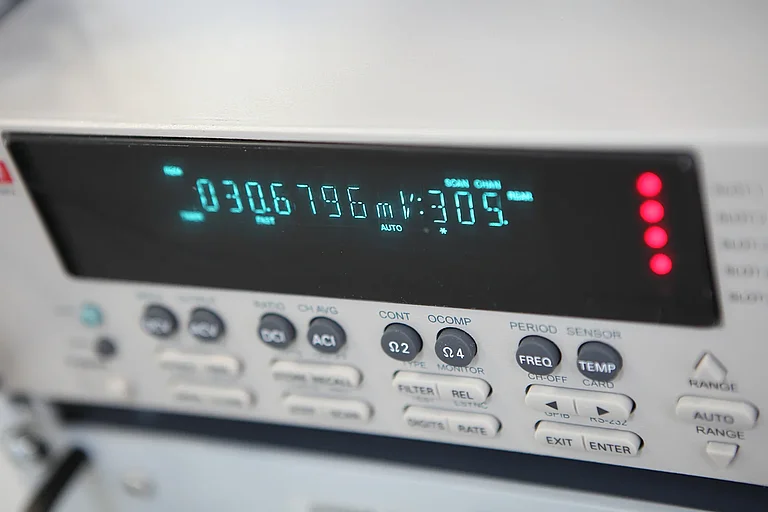
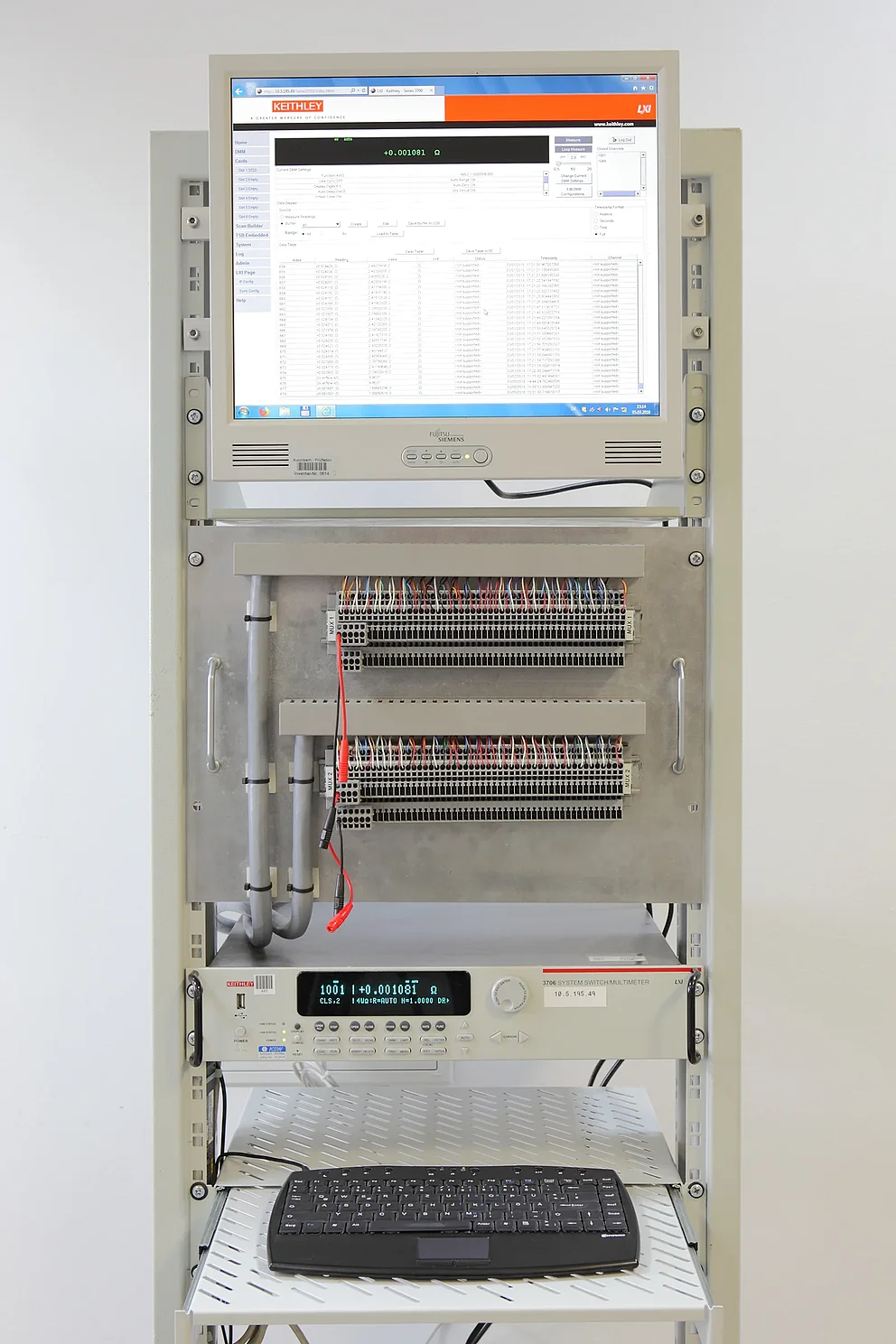
High-precision measurements of electrical resistance down to the micro-resistance (µΩ) range
Using special micro-ohmmetres in the four-wire measurement method
Continuity Resistance Measurement with Prescribed Current
According to DIN EN 60512-2-3, e. g. with ≤ 100 mA for LV contacts, 1 - 10 A for HV contacts
Dry-Circuit Measurements (mV Method)
According to DIN EN 60512-2-1 electrical resistance measurements with low test voltage (≤ 20 mV) to detect contamination or corrosion at contacts and to determine the actual electrical contact quality as well as to protect surfaces
Electrical Contact Monitoring < 1 μs (Interruption Duration and Resistance)
Detection of interruptions at electrical contact pins and connectors during environmental tests in the range up to micro-seconds (< 1 μs)
Electrical Testing for Automotive Components: Vehicle On-Board Network Simulation
Standards and Quality Assurance
Our testing procedures are based on the following standards and guidelines:
- GS 95024-2-1
Electrical and electronic components in motor vehicles – Electrical requirements and tests - MBN 10567
Electrical and Electronic Components in Motor Vehicles – 12 V Electrical System – Requirements and Tests - MBN LV124-1
Electrical and Electronic Components in Passenger Cars up to 3.5 t – Part I: Electrical Requirements and Tests (12 V Electrical System)
Who We Test For – Industries at a Glance
Our electrical testing methods are used in a wide range of industries:
Automotive & Electric Mobility
Control units, charging electronics, on-board network components, management systems
Railway Technology
Power supplies, control technology, displays, signal and communication systems
Medical Technology
Mobile supply and analysis systems, displays and communication systems
Energy Technology & Industrial Electronics
Sensors, power components and communication, control systems and control technology
Smart Building & Building Automation
Sensors, control units, actuators, as well as lighting and control technology
We are open to all industries and provide standards-compliant advice for your testing tasks.
Typical test specimens:
- Connectors, wiring harnesses, charging plugs
- Relays, contactors, actuator modules
- Sensors, control systems
- Lights, control elements, industrial equipment
- A large portion of the sensors and actuators in the automotive sector
Testing Methods and Technologies
Electrical Tests
- Contact resistance measurement
- Dry-circuit test
- Insulation resistance and dielectric strength
- High-voltage and high-current tests
- Derating and thermography
- Current cycling test
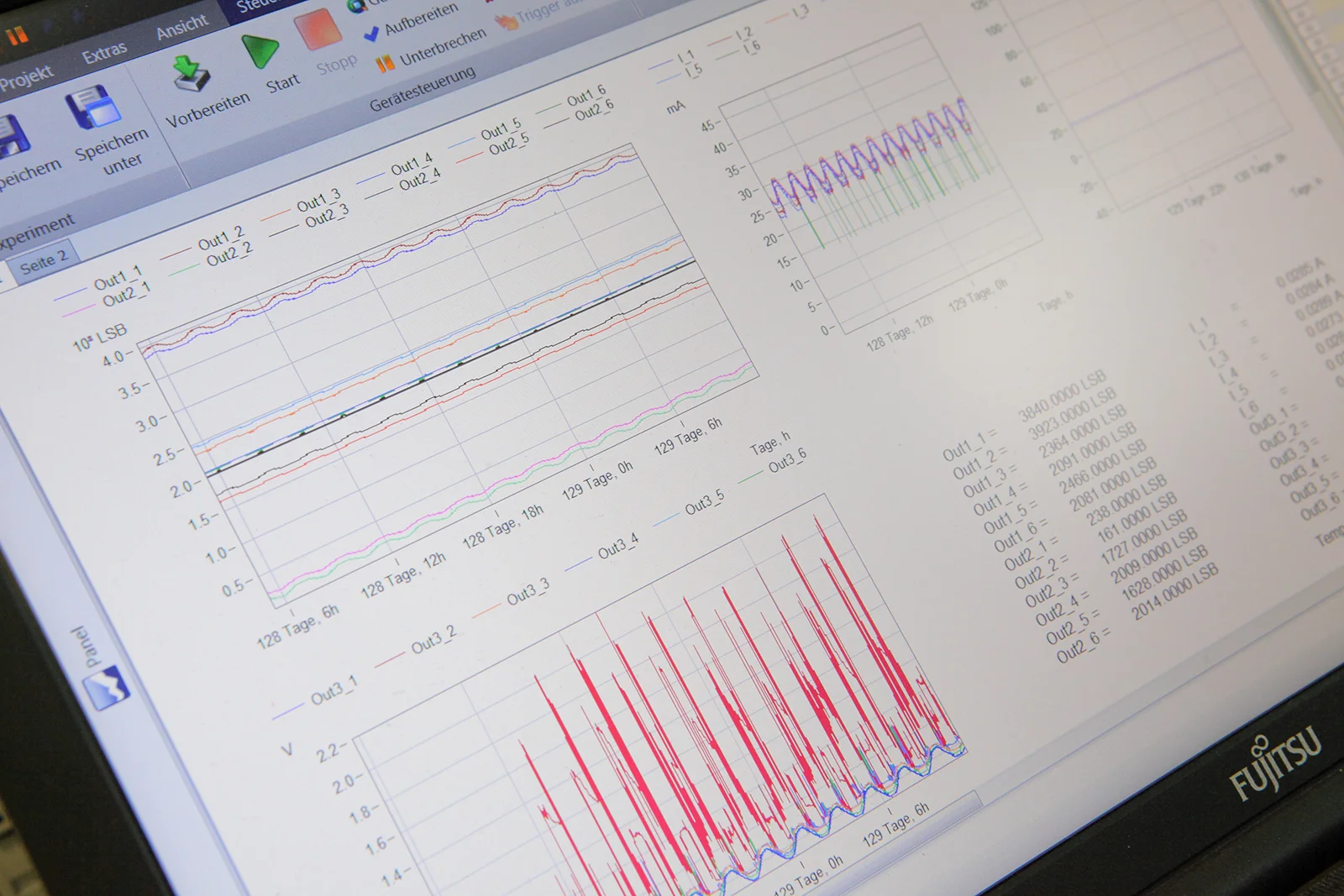
Electrical Testing for Automotive Components: Automotive Electrical System Simulation
- E-01 to E-24 tests using an arbitrary waveform generator, amplifier, and high-speed switch
Electronic load simulation & current sources
For tests under real operating conditions, we use electronic loads, high-voltage power supplies, and adjustable current sources—for practical testing of electrical power consumption, switching behavior, and stability.
Ideal for testing control units, inverters, or actuators—in development and continuous operation scenarios.

Customer Benefits at AUCOTEAM
- Standard-based procedures (VW, MBN, GS, SAE/USCAR and many more) and customer-specific test sequences
- Realistic test procedures
- Combination of climate tests, endurance tests or IP tests
- Customizable test sequences & test benches
- Ideal for development and series approval
- Fully documented results for audits, certification or internal quality assurance
- Consulting by experienced test engineers with in-depth industry expertise
- Wide selection of state-of-the-art measurement technology

Request Electrical Testing Now!
Do you need a high-voltage test that meets industry standards, an insulation test, or a complete electrical validation of your assembly?
Contact us—together, we will develop the right test plan.